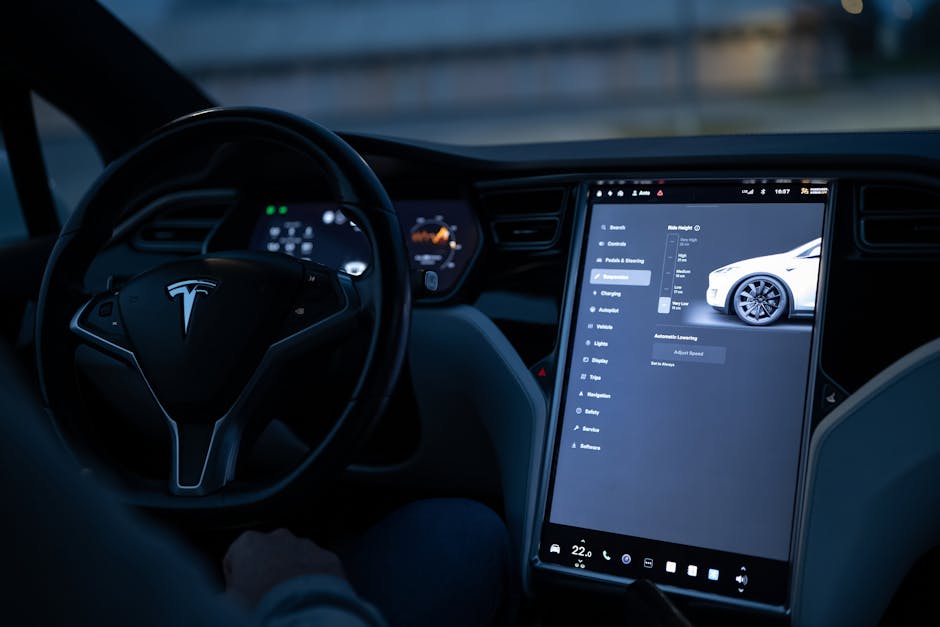
What does “car software” actually mean?
In the past, a vehicle’s electronic components were limited to isolated control units – an engine control module, an anti‑lock brake system, a simple infotainment screen. The term “car software” now covers everything that runs on these units and on the central computing platform that many manufacturers are installing in new models.
Key parts of modern car software include:
- Operating system (OS) – often a real‑time Linux variant or Android Automotive that manages hardware resources.
- Vehicle‑level applications – navigation, voice assistants, over‑the‑air (OTA) update clients, driver‑assistance algorithms.
- Domain controllers – high‑performance processors dedicated to ADAS (advanced driver‑assistance systems), battery management, or connectivity.
- Telematics stack – cellular, Wi‑Fi, and V2X (vehicle‑to‑everything) modules that keep the car linked to cloud services.
All of these software layers work together to shape what the driver feels, sees, and hears while the car is moving.
Why is Europe a hotspot for software‑driven cars?
Europe’s regulatory environment, market expectations, and infrastructure development create a fertile ground for software innovation.
- Stringent emissions and safety rules – The EU’s CO₂ fleet limits and Euro NCAP safety standards push manufacturers to use software for efficiency and crash avoidance.
- High broadband penetration – Widespread 5G roll‑out enables reliable OTA updates and low‑latency V2X communication.
- Urban mobility policies – Congestion charges, low‑emission zones, and shared‑mobility schemes encourage features such as intelligent routing and electric‑vehicle (EV) optimisation.
- Strong supplier ecosystem – Companies like Bosch, Continental, and Valeo invest heavily in automotive software platforms, often collaborating with local universities and research institutes.
How software improves everyday driving
Navigation that adapts in real time
Traditional GPS maps showed static routes based on the last downloaded data. Modern car navigation systems receive live traffic feeds, road‑work alerts, and even predictive congestion models generated by cloud AI. In Germany, for example, many manufacturers integrate the “Digital Toll” data from the Toll Collect system, allowing the navigation to suggest cost‑optimal routes for heavy‑goods vehicles.
Efficiency gains for internal‑combustion and electric powertrains
Software can fine‑tune fuel injection timing, shift patterns, and start‑stop logic to keep CO₂ emissions within EU limits. For EVs, the battery‑management system (BMS) balances cells, predicts range based on temperature and driving style, and schedules charging to take advantage of off‑peak electricity tariffs. In Scandinavia, OTA updates have added “Winter Mode” algorithms that pre‑heat batteries without sacrificing range.
Driver‑assistance that feels like a co‑pilot
Features such as adaptive cruise control, lane‑keeping assist, and traffic‑jam assist rely on sensor fusion – cameras, radar, and lidar processed by software in real time. European legislation requires new cars to include at least Level 2 autonomous functions, meaning the system can control steering and speed but the driver must stay engaged. The software determines how aggressively the car follows a vehicle, how early it signals lane changes, and how it reacts to unpredictable road users.
Connected services that extend the car’s usefulness
Telematics enables remote climate control, vehicle‑status checks, and the ability to lock or unlock doors via a smartphone app. In the Netherlands, many fleet operators use a central dashboard that aggregates data from dozens of cars, providing insights into driver behaviour, fuel consumption, and maintenance needs.
Over‑the‑air updates: Keeping the car current without a workshop
Historically, a software bug meant a recall visit to the dealer. OTA technology changes that model. When a manufacturer discovers a security flaw or wants to improve an algorithm, it can push the new code directly to the vehicle over a cellular connection.
Key benefits of OTA in Europe include:
- Regulatory compliance – Faster rollout of emissions‑related updates helps meet EU reporting deadlines.
- Safety patches – Critical ADAS tweaks can be delivered within days rather than months.
- Feature rollouts – Manufacturers can offer new infotainment apps, navigation maps, or even subscription‑based driver‑assist functions after the car has been sold.
Security is a major concern. European standards such as ISO/SAE 21434 for automotive cybersecurity require encrypted communication, signed firmware, and a secure boot process. Most OEMs now run a “dual‑signature” system: one signature from the car maker, another from a third‑party security provider.
Impact on vehicle ownership and maintenance
Software changes the economics of owning a car in several ways.
Predictive maintenance
Embedded sensors continuously monitor wear on brakes, tires, and the transmission. The BMS analyses trends and alerts the driver when a component is likely to fail soon. In France, several car‑sharing platforms have reported a 15 % reduction in unexpected breakdowns after adopting predictive‑maintenance alerts.
Subscription‑based features
Instead of buying a premium sound system at purchase, a driver can subscribe to a “Premium Audio” package that unlocks software‑controlled amplifiers and streaming services. This model spreads cost over time and lets owners upgrade or cancel without hardware changes.
Extended vehicle lifespan
Because many functions are software‑defined, a car can receive new capabilities years after leaving the showroom. A 2021 model equipped with a Level 2 ADAS stack can receive a Level 3 “highway pilot” update when regulations allow, extending its relevance in the market.
Regulatory landscape shaping software development
The EU adopts a layered approach to automotive software.
Functional safety – ISO 26262
This standard defines how safety‑critical software must be developed, tested, and documented. It introduces Automotive Safety Integrity Levels (ASIL) from A (lowest) to D (highest). A lane‑keeping assist system that can prevent a crash would be classified as ASIL‑D, demanding rigorous verification.
Cybersecurity – ISO/SAE 21434
Published in 2021, the standard requires manufacturers to conduct threat analyses, implement secure communication protocols, and maintain an incident‑response plan. In practice, this means the ECU (electronic control unit) firmware is signed, and OTA updates are encrypted end‑to‑end.
Data protection – GDPR
Cars collect location, driver‑identification, and usage data. The General Data Protection Regulation obliges manufacturers to obtain explicit consent, provide clear privacy notices, and allow users to delete personal data. Many European OEMs now include a “Data Settings” menu in the infotainment system where drivers can manage consent.
Case studies: Software in action across Europe
Sweden: Electric‑fleet optimisation
Volvo’s “Recharge” platform uses AI to predict the most efficient charging schedule for fleet operators in Stockholm. The software analyses historic traffic patterns, electricity price curves, and battery health to recommend charging during low‑cost periods while ensuring the vehicle is ready for peak‑hour demand. Early adopters report up to 8 % reduction in electricity costs.
Italy: V2X for safer city driving
In Milan, a pilot project equipped 500 taxis with V2X modules that broadcast their position, speed, and intention (e.g., lane change). Traffic lights receive this data and adjust phase timing to smooth traffic flow. The software also alerts drivers to potential conflicts with cyclists, a common hazard in dense urban areas.
United Kingdom: OTA for emissions compliance
Following a stricter CO₂ fleet‑average target for 2025, a major British automaker released an OTA update that recalibrated the engine control maps of its diesel models. The update reduced average fuel consumption by 0.3 l / 100 km, helping the brand avoid a hefty fines regime.
Challenges and limits of software‑driven cars
Despite the benefits, several obstacles remain.
Hardware constraints
Software can only do as much as the sensors and processors allow. A low‑cost model may use a single camera for lane detection, limiting its ability to handle complex weather conditions. Upgrading hardware after purchase is rarely feasible, which caps the ceiling for future updates.
Interoperability
Europe hosts many OEMs, each with its own proprietary software stack. Integrating third‑party apps or aftermarket accessories often requires reverse engineering, raising safety and security concerns. Standardisation efforts such as the AUTOSAR Adaptive Platform aim to create a common API, but adoption is still uneven.
Consumer perception
Drivers accustomed to mechanical control sometimes distrust software that auto‑brakes or steers. Transparent communication about how the system works, and providing a manual override, are essential to build trust.
Legal responsibility
When a software glitch contributes to an accident, determining liability can be complex. EU law is evolving to address questions of manufacturer versus driver responsibility for autonomous features.
The future outlook for car software in Europe
While the article avoids speculative promises, current trends suggest three realistic directions.
- Increased standardisation – Adoption of common middleware (e.g., AUTOSAR Adaptive) will simplify OTA updates and third‑party integration.
- More cloud‑edge hybrid processing – Time‑critical tasks (braking, obstacle detection) will stay on‑board, while non‑critical analytics (traffic‑flow improvement, infotainment personalization) move to the cloud.
- Regulatory‑driven feature unlocking – As the EU permits higher levels of autonomy, manufacturers will likely enable new driver‑assist functions via software rather than hardware redesign.
These developments will keep the European driver experience tightly linked to software evolution, making the car feel more like a connected service than a static machine.
