Why driver distraction remains a top safety concern
Every year, traffic‑safety agencies release data that places driver distraction among the leading causes of crashes. In 2026 the number of accidents attributed to distraction has not fallen dramatically, even though many car manufacturers have introduced advanced driver‑assistance systems (ADAS). The paradox is simple: technology reduces some risks while creating new ones. Understanding which distractions still dominate helps policymakers, manufacturers, and everyday drivers focus on the most effective countermeasures.
How distraction is defined and measured
In safety research, “distraction” refers to any activity that diverts a driver’s attention away from the primary task of controlling the vehicle. Researchers break distraction into three categories:
- Cognitive: thinking about something unrelated to driving, such as planning a weekend or worrying about a work deadline.
- Visual: taking eyes off the road, for example by looking at a phone screen or GPS.
- Manual: removing hands from the wheel, such as reaching for a drink or adjusting a radio knob.
Most modern studies use a combination of in‑vehicle video, eye‑tracking, and crash‑report data to estimate the prevalence of each type. In 2026, the National Highway Traffic Safety Administration (NHTSA) still reports that visual‑manual distractions account for about 60 % of distraction‑related crashes, while pure cognitive distraction makes up roughly 30 % and mixed forms the remaining 10 %.
The biggest visual‑manual distractions in 2026
Even with voice‑controlled interfaces and larger touchscreens, several visual‑manual tasks continue to dominate crash statistics.
Smartphone use
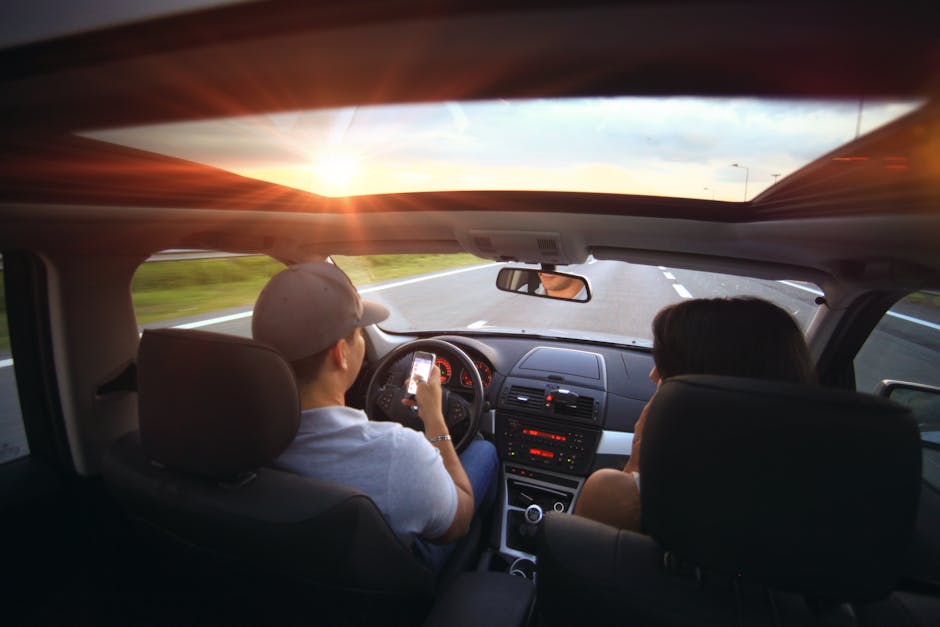
Smartphones remain the most frequently cited source of distraction. Despite legislation in many jurisdictions that bans handheld use while driving, drivers still engage in:
- Reading text messages or emails.
- Scrolling through social‑media feeds.
- Using navigation apps that require frequent interaction.
In 2025, a multi‑state study found that the average driver who uses a phone while driving looks away from the road for 2.3 seconds per glance, a period long enough to travel the length of a typical city block at highway speed.
In‑vehicle infotainment systems
Touchscreen consoles have become larger and more feature‑rich. While they reduce the need for physical knobs, they often require drivers to look down and manipulate icons. Common tasks include:
- Selecting radio stations or streaming music.
- Adjusting climate controls.
- Entering destinations into a navigation system.
Research from the University of Michigan shows that a typical infotainment interaction takes 1.8 seconds of eye‑off‑road time, with a noticeable increase when the interface layout changes after software updates.
Physical controls that are not integrated
Many vehicles still have separate climate, seat, and driver‑assistance buttons that sit on the dashboard or center console. Drivers often stretch across the wheel to reach these controls, which creates both manual and visual distraction. Even “button‑less” cars with steering‑wheel shortcuts suffer from this issue when the shortcut locations differ from older models, forcing drivers to relearn hand placement.
Cognitive distractions that are harder to see
Unlike looking at a phone, cognitive distraction does not involve a visible glance. Yet it is equally dangerous because it reduces situational awareness.
Stress and emotional overload
Work deadlines, personal arguments, or health concerns can occupy a driver’s mind. Studies using EEG headsets in simulators show that high stress reduces lane‑keeping precision by up to 30 %.
Multitasking with passengers
Conversations with adult passengers can lead to “mind wandering.” While the driver’s eyes remain on the road, their thoughts shift to the discussion. The risk spikes when the conversation includes instructions about navigation or route changes, prompting the driver to glance at a map or device.
Fatigue combined with mental load
Long‑haul truckers and rideshare drivers often report “highway hypnosis”—a state where the eyes are open but the brain runs on autopilot. Adding a mental task, such as planning a delivery schedule, deepens the lapse and increases the likelihood of delayed reaction to hazards.
The impact of ADAS and semi‑autonomous features
Level 2 and Level 3 driver‑assistance systems—such as adaptive cruise control, lane‑centering, and traffic‑jam pilot—promise to reduce workload. In practice, they have produced mixed results.
Risk compensation
When a driver knows the car will keep them centered in a lane, they may feel justified in looking away for longer periods. This “automation bias” can turn a brief glance into a dangerous interval. NHTSA’s 2024 report estimated a 12 % increase in off‑road glance time among drivers using Level 2 systems compared with those without.
Transition periods and “take‑over” requests
When the system reaches its operational limits—such as during heavy rain or complex intersections—it issues a take‑over request. If the driver’s attention is elsewhere, the transition can be delayed, leading to crashes. Data from a 2025 fleet of robo‑taxis indicated that 18 % of take‑over incidents involved the driver still engaged with a secondary task.
Partial reliance on voice assistants
Voice commands reduce manual interaction but do not eliminate visual distraction. Drivers often glance at the screen to confirm that a voice command was understood, especially when speech recognition fails. The net benefit therefore depends on the accuracy of the voice system and the driver’s trust in it.
Regulatory landscape and its effect on driver behavior
Governments have responded to distraction with a patchwork of laws, enforcement strategies, and public‑education campaigns.
Handheld‑phone bans
All 50 U.S. states have some form of handheld‑phone prohibition. However, enforcement varies widely. States that combine fines with automated red‑light cameras see a 7 % reduction in handheld usage, while others with only passive signage report no measurable change.
Distracted‑driving penalties for infotainment interaction
Three states—California, New York, and Texas—have extended penalties to include operating a vehicle’s touchscreen while moving. The statutes define “operation” as any interaction that requires the driver’s eyes to be off the forward roadway for more than one second. Early data suggest a modest decline in reported infractions, but long‑term driver habits have not been fully assessed.
Standard‑setting bodies
The International Organization for Standardization (ISO) released ISO 26262‑3 in 2025, providing guidelines for human‑machine interface (HMI) design in ADAS. Manufacturers that adhere to the standards must limit visual‑manual interaction to under 1.5 seconds per event in critical driving phases. Compliance reporting has become a part of vehicle type‑approval in the European Union.
What industry is doing to mitigate distraction
Car makers, smartphone manufacturers, and software developers are each contributing solutions.
Improved HMI ergonomics
Designers are moving critical controls to the steering wheel, using haptic feedback to confirm selections without visual confirmation. Studies show that drivers can accurately select radio stations using wheel‑mounted strobes with an average glance time of 0.4 seconds.
Context‑aware phone interfaces
Major operating systems now include “driving mode” that limits notifications, disables certain apps, and converts incoming messages to audio. While adoption is growing, many drivers manually disable the feature because they perceive it as intrusive.
AI‑driven distraction monitoring
New camera‑based systems use facial‑landmark detection to estimate eye‑glance direction and head pose. When the system detects an extended off‑road glance, it alerts the driver with auditory cues or gentle steering torque. Early field trials report a 15 % reduction in off‑road glance duration.
Education and behavior‑change programs
Public‑private partnerships have launched campaigns that frame distraction as a personal safety issue rather than a legal one. Interactive simulations that let drivers experience the consequences of a 2‑second glance have been shown to improve self‑reported compliance by 22 %.
What the data says about the biggest remaining risks
When the most recent comprehensive data set—covering 2024‑2025 crash reports across North America, Europe, and Asia—is analyzed, three sources of distraction consistently top the risk chart.
| Distraction Source | Contribution to Crash Risk (%) | Typical Glance Duration (seconds) |
|---|---|---|
| Handheld smartphone use | 28 | 2.3 |
| In‑vehicle touchscreen interaction | 22 | 1.8 |
| Cognitive overload (stress, conversation) | 18 | — (no visual glance) |
| Take‑over requests from ADAS | 12 | — (delayed reaction) |
| Other manual controls (climate, seat) | 10 | 1.2 |
| Other (e.g., eating, grooming) | 10 | 1.5 |
The table highlights that while newer technology introduces fresh hazards, the classic problem—handheld phone use—still accounts for more than a quarter of distraction‑related crashes. Cognitive overload, though invisible, is the second‑largest factor, underscoring the need for mental‑state awareness.
Practical steps drivers can take today
Understanding risk does not automatically change behavior. The following actions have the strongest evidence base for reducing distraction‑related crashes.
- Activate driving mode on smartphones before starting the trip. Pre‑set navigation and music playlists to avoid on‑the‑road adjustments.
- Use steering‑wheel controls for volume and calls. This keeps hands on the wheel and eyes forward.
- Limit conversation depth with passengers while driving. Save detailed discussions for stops.
- Schedule breaks on long trips. Fatigue amplifies both visual and cognitive distractions.
- Enable ADAS alerts that monitor eye‑glance. Treat warnings as reminders, not optional features.
- Practice “glance‑and‑go” technique. When a glance is unavoidable, keep it under one second and refocus immediately.
Where the industry is likely headed
Although the prompt asks for present‑focused analysis, a brief look at emerging trends helps illustrate why the current risk profile may shift.
Fully hands‑free vehicle interfaces
Gesture recognition and eye‑track‑based selection are moving from prototype to production. If these systems achieve high reliability, visual‑manual distraction could fall below 10 % of crash risk.
Integrated driver‑state monitoring
Future cabins may combine heart‑rate sensors, skin conductance, and facial analysis to gauge stress and fatigue in real time. Alerts could then be personalized, reducing cognitive overload.
Legislation focused on mental distraction
Some jurisdictions are debating laws that penalize drivers for “unsafe mental engagement,” akin to texting bans. Enforcement would rely on in‑vehicle monitoring data, raising privacy concerns that will need careful balancing.
Key takeaways for anyone interested in road safety
Driver distraction in 2026 remains a multi‑faceted problem. The biggest risk still comes from handheld smartphone use, followed by infotainment interaction and cognitive overload. ADAS technologies provide assistance but also introduce new challenges such as delayed take‑over. Regulations have tightened, yet enforcement and driver habits evolve more slowly than technology.
Reducing distraction will require coordinated effort: clearer HMI design, smarter phone interfaces, robust monitoring systems, and sustained public‑education campaigns. For individual drivers, the most effective measures are simple—use phone‑silencing features, keep hands on the wheel, and stay mentally focused on the road.
